Rates Split The Housing Market
Rising mortgage rates are squeezing lower-income buyers while luxury demand stays resilient.
May 8th, 2026
Mortgage rates are once again driving the housing conversation, and the latest signals point in two directions at once: borrowing costs are edging higher, yet buyer demand has not vanished. For many households, though, the strain is becoming harder to ignore. Recent data suggest that lower-income borrowers are pulling back first, while wealthier buyers and cash-heavy markets continue to shape the upper end of the real-estate landscape.
Rates Push Back Buyers
The most immediate story is the rise in mortgage costs. One report says rates climbed to their highest point in about a month, while another puts the average 30-year fixed loan at 6.30% for the week ending April 30, 2026, up from 6.23% the week before. That may look like a small move, but in housing finance, even modest changes can affect affordability, monthly payments, and the number of people who can qualify.
The impact is already showing up in application data. Total mortgage demand slipped as both current owners and prospective buyers stepped back. The decline was especially visible among first-time buyers, a group that is often most sensitive to payment changes and upfront costs. When borrowing gets more expensive, the market tends to lose the households with the least room to absorb the extra strain.
Lower-Income Borrowers Feel It First
One of the clearest signals in the data is the rise in average loan size. That usually means the applicant pool has shifted toward larger, higher-income loans after smaller borrowers dropped out. In other words, the market is not just slowing evenly; it is thinning at the lower end.
That pattern matters because it can widen the divide between households that can still compete and those that cannot. Buyers with larger down payments, stronger incomes, or more flexibility may continue to move ahead, while entry-level shoppers find themselves priced out by the combination of rates, prices, and monthly payment pressure.
• Higher rates are reducing affordability for marginal buyers
• Average loan sizes are rising as smaller borrowers retreat
• First-time purchasers appear to be among the most affected
Demand Holds Up in Pockets
Even with the rate increase, one of the reports says buyer demand remains robust. That suggests the housing market is not moving in lockstep. Some segments are clearly slowing, but others are still active enough to keep lenders and brokers busy.
This split is not unusual in a market shaped by uneven wealth, regional differences, and varying expectations about future rate moves. Buyers with urgent life needs, strong balance sheets, or a belief that prices will keep climbing may keep transacting even when financing becomes less favorable. The result is a market that looks softer on the surface but remains competitive in select corners.
Luxury Markets Keep Their Own Rhythm
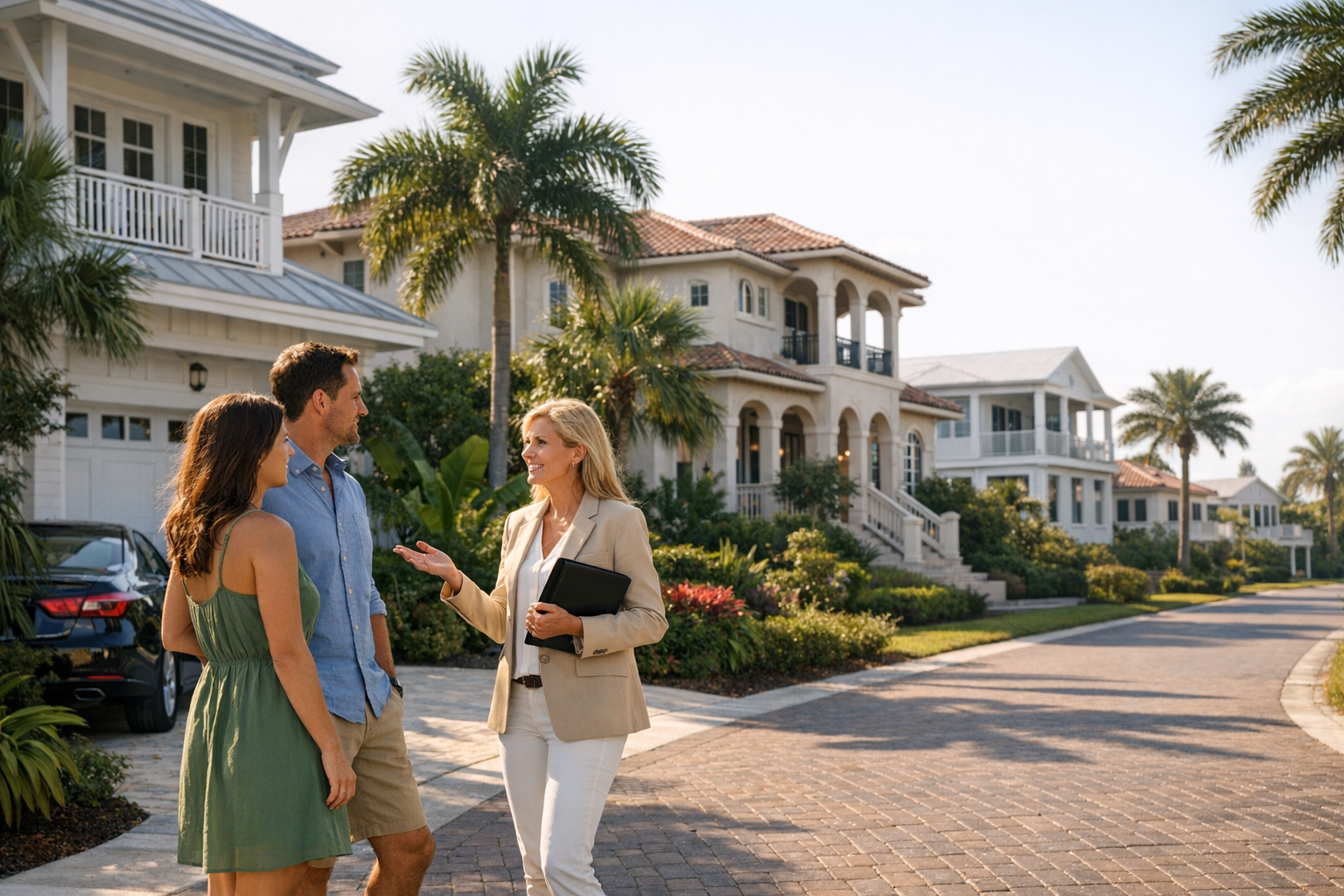
Nowhere is that divide more visible than in the luxury segment. A separate report points to Naples, Florida, as a growing rival to the state’s better-known ultra-wealthy enclaves. While attention often goes to waterfront estates in Miami’s Coconut Grove and to compounds in Palm Beach and Manalapan, Naples is emerging as a quieter but increasingly important destination for affluent buyers.
That matters because luxury markets often behave differently from the broader housing market. High-end purchasers are less dependent on mortgage rates, more likely to pay cash or use financing selectively, and more willing to prioritize lifestyle, privacy, and long-term value over short-term borrowing costs. As a result, the top of the market can stay active even when middle-income demand weakens.
Naples Gains a Bigger Profile
The Naples story is not just about one city attracting wealthy buyers. It also reflects a broader shift in where affluent households want to live in Florida. The state’s east coast has long dominated the luxury conversation, but Naples is gaining attention as a place with its own appeal and growing status.
That rise suggests prestige is becoming more distributed across the state. Instead of a single luxury center, Florida now appears to have multiple high-end hubs competing for attention, capital, and residents. For brokers, developers, and local officials, that can mean more demand for premium inventory, more pressure on land use, and more competition among elite neighborhoods.
The appeal of Naples also underscores a broader truth in housing: the strongest markets are often the ones that combine lifestyle, exclusivity, and limited supply. When those factors line up, affluent buyers may continue to move even if the financing backdrop is less favorable for everyone else.
What the Split Market Means
Taken together, the reports sketch a housing market that is not collapsing, but fragmenting. The lower end is feeling the most strain from rising mortgage rates, while the upper end retains enough momentum to keep luxury regions active. That split can create very different experiences depending on where a buyer sits in the income distribution.
For lenders, the shift may mean a different customer mix and a heavier tilt toward larger loans. For agents, it may mean more time spent serving clients who can still move quickly, and more effort helping first-time buyers navigate a tougher environment. For sellers, especially in the mid-market, it can mean a narrower pool of qualified purchasers.
• Luxury demand remains supported by wealth and cash
• Mid-market and entry-level buyers face tighter affordability
• Regional hotspots are diverging in performance
A Market Defined by Uneven Pressure
The latest coverage offers a limited but useful snapshot: mortgage rates are up, demand has softened at the margins, and wealthier segments continue to operate by different rules. That combination does not point to a single national housing story so much as a set of overlapping ones.
For now, the clearest message is that rate increases are still powerful enough to knock some buyers out of the market, especially those with less income and less flexibility. But the persistence of demand in selected segments, along with the rise of luxury destinations like Naples, shows that housing remains deeply stratified. In today’s market, affordability pressure and high-end resilience are not contradictions. They are happening at the same time.