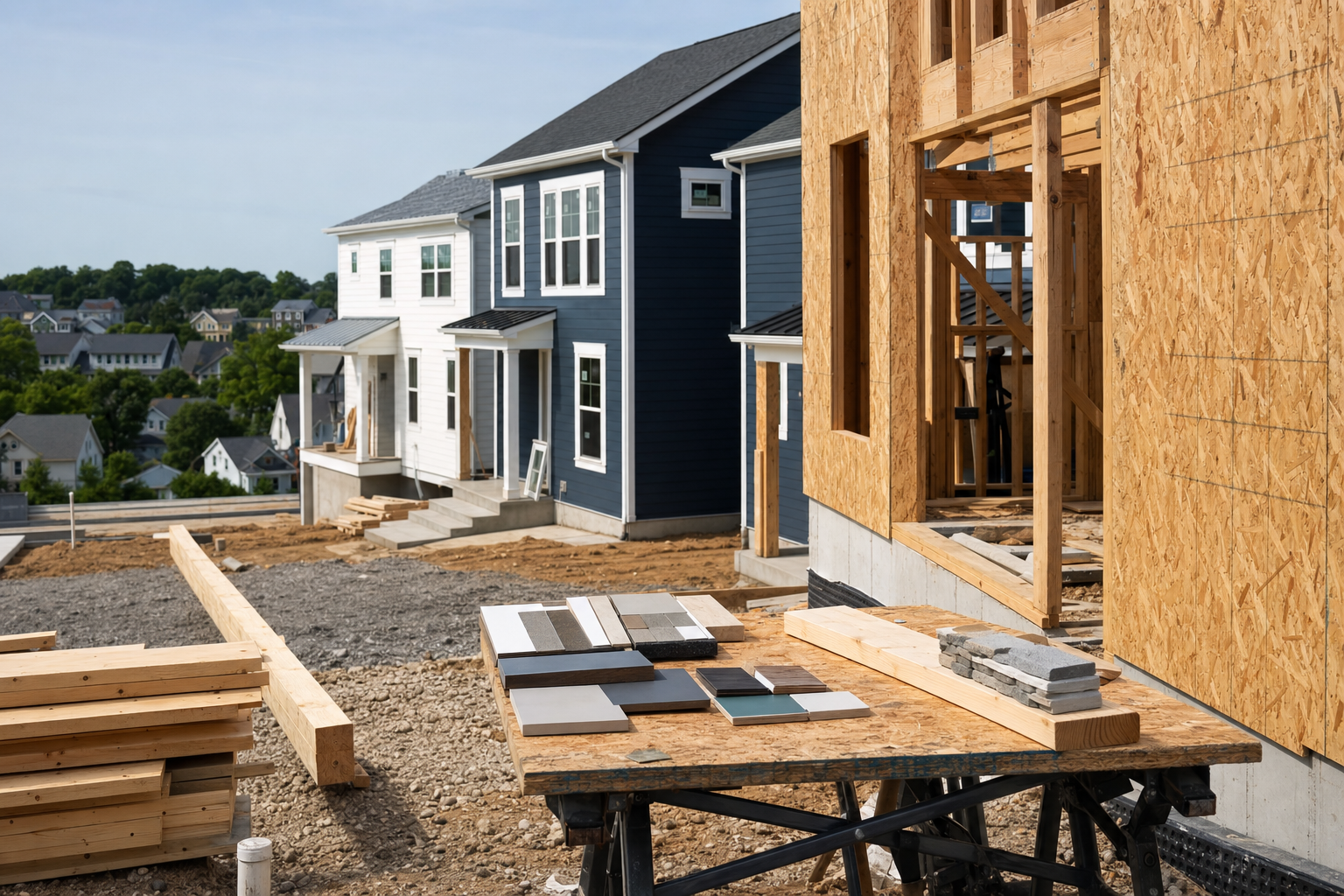
New construction is giving buyers more to compare, but not all supply is equal. Before you book tours, stack each new-build option against resale homes, builder incentives, finish quality, and how grown-up the neighborhood actually feels.
New builds are not one market
The phrase “new construction” hides a lot. Recent data shows new-build inventory growth holding in the 5% to 9% year-over-year range while existing inventory growth slows. But urban new construction is still scarce, expensive, and in high demand. Translation: a fresh townhouse near transit and a subdivision home 35 minutes out are not competing in the same lane.
- Start your search by separating urban infill, close-in suburban, and outer-suburban projects.
- Do not assume “more new supply” means more choice in the exact neighborhood you want.
New-build supply snapshot
Supply is above balance, but lower than a year earlier.
Supply has a ceiling
Builders are not drowning in finished homes. March new single-family inventory stood at 481,000 units, down 0.4% from February and 4.6% from a year earlier. Months of supply was 8.5, lower than 9.2 a year earlier but still above the six-month balanced-market level. That creates a strange buyer moment: enough inventory to negotiate in some projects, not enough to treat every market like a clearance rack.
- If a builder has multiple similar lots sitting, compare incentives hard.
- If only one floor plan fits your life, move faster but keep your inspection standards intact.
New construction inventory growth range
New construction inventory growth is positive, but that does not mean every location is flush with options.
The perk is not the whole price
Builder incentives are real: price cuts, upgrades, closing-cost help, and mortgage-rate buydowns are all in the mix. One March analysis found new-home sales prices more than $20,000 below existing-home prices. Still, the smartest comparison is not “new versus old.” It is the full package: purchase price, included finishes, upgrade costs, lot quality, commute, HOA rules, and the resale homes sitting nearby.
- Treat free upgrades as line items, not vibes.
- Ask what is standard, what is model-home theater, and what costs extra.
The incentive-era price gap
One cited March analysis found new-home prices more than $20,000 below existing-home prices.
Tour the neighborhood, not just the model
A new home can look finished before the place around it feels finished. Check the boring stuff: sidewalks, shade, traffic patterns, grocery access, noise, school routes, and whether empty parcels nearby are future parks, homes, retail, or question marks. This is where resale alternatives matter. In April, homes spent a typical 57 days on market, and some regions saw new-listing momentum improve, giving buyers more comparison points before committing to a fresh build.
- In Moea, map the project against daily-life anchors, not just commute time.
- Save nearby resale homes so you can compare mature blocks against builder-new convenience.
Do the quiet work before Saturday
Before you tour, build a shortlist inside Moea that forces the right questions. Use Map Search for neighborhood context, Visual Search for exterior and interior cues, saved searches for competing resale options, and discovery flows to screen incentives against design quality. Then tour only the homes that survive the comparison.
- Compare builder incentives side by side.
- Zoom into materials, light, storage, and exterior detailing.
- Keep one resale backup for every new-build favorite.
Related Moea features
Download Moea to use these features in the app. They help turn the day's market signals into saved searches, payment checks, tours, and deeper research when you are ready to act.
Compare new-build projects against commute routes, daily errands, and nearby resale homes.
Map the tradeoffsSpot finish details, exterior materials, storage, light, and design cues before booking a tour.
Search by lookTrack builder listings and resale backups together so incentives do not blur the real choice.
Save your shortlistWritten with Daft AI from today's real-estate signals, market reporting, and Moea context. It is here to help you spot the shape of the day, not replace your own diligence; details can shift, and even smart models can miss nuance.