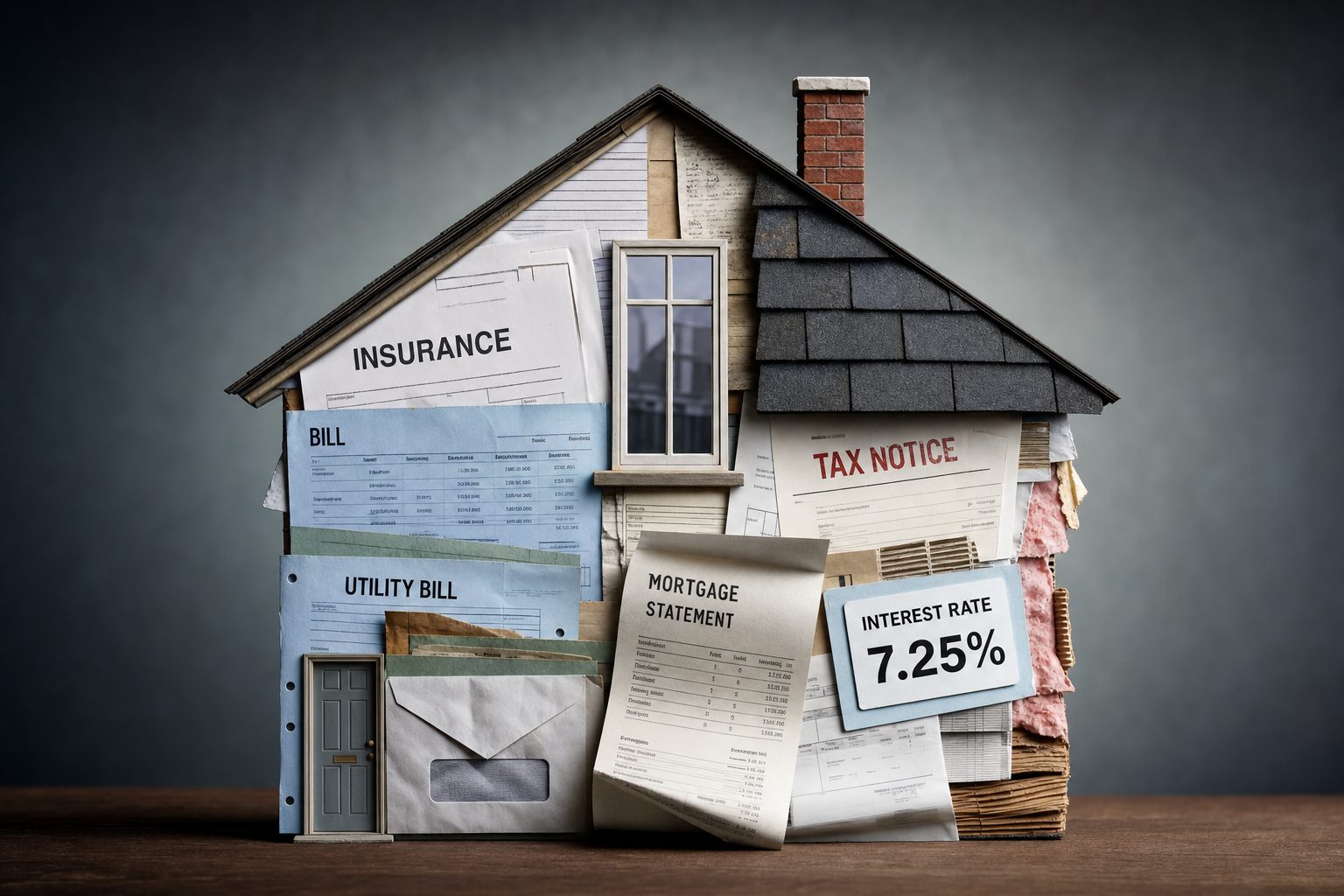
The fixed-rate mortgage still fixes one thing: principal and interest. Everything around it is moving. Property taxes, roof coverage, HELOC rates, and a slower client pipeline are turning “Can I afford the payment?” into the wrong question.
The real payment is bigger than the mortgage
For years, the 30-year fixed mortgage sold a clean promise: lock the rate, know the payment, breathe easier. That promise is thinner now. The loan can stay predictable while the rest of the monthly bill gets louder — taxes, premiums, deductibles, maintenance, and the cost of borrowing against equity.
- The smartest budget now has a “next year” column, not just a closing-day column.
- Ask what has changed fastest in the last three years: taxes, insurance, HOA dues, or repairs.
- A lower purchase price can still become a stretched monthly reality if local costs are climbing.
Signal Snapshot: Costs That Bite After Closing
The pressure points are not all inside the mortgage note.
Taxes are becoming a moving trigger
Property taxes are no longer background noise. One survey cited by Yahoo Finance found 40% of homeowners said they had considered moving because their property taxes had gotten so high. That matters for buyers too: today’s “comfortable” payment can look different after reassessment, especially in markets where values rose quickly.
- Before making an offer, look up recent tax history — not just the current bill.
- If the home recently sold below or above assessed value, ask how reassessment works locally.
- Build your max budget around the payment after taxes reset, not the one shown in the listing calculator.
Insurance is turning repairs into strategy
Roof damage used to feel like an insurance question. Now it can become a personal cash-flow question. MarketWatch reported that a federal rule has helped insurers shift more roof-replacement costs onto homeowners, right as hail and hurricane season raises the odds of claims. The awkward choice: file and risk a higher premium, or pay out of pocket.
- During inspection, treat roof age like a price point, not a footnote.
- Ask whether coverage is replacement-cost or actual-cash-value for roof damage.
- If the roof is near the end of its life, negotiate credits with real numbers, not vibes.
Equity is useful, but it is not free money
Home equity can still be a powerful cushion, but the cushion has a rate attached. Curinos data cited by Yahoo Finance put the average HELOC rate at 7.25% in late June. That does not make HELOCs bad. It does mean using equity for repairs, debt payoff, or renovations should be judged against the monthly payment it creates.
- A HELOC can solve timing; it can also add pressure if income is already tight.
- Compare the HELOC payment with the cost of delaying the repair.
- Do not use equity as a substitute for a real maintenance fund.
Waiting for rates to save the deal is a weak plan
Mortgage-rate hope is not much of a strategy. Inman’s recent market commentary argued that rates are not supposed to “save” the market, while another Intel report found brokerages still were not feeling relief even as some financial-sector nerves cooled. Translation: the better move is sharper math, cleaner priorities, and less fantasy pricing.
- Buyers: shop the whole ownership cost, not just the rate quote.
- Sellers: expect more questions about taxes, insurance, and repair exposure.
- Agents: the useful conversation is not “Should we wait?” It is “What cost can we control?”
Related Moea features
Download Moea to use these features in the app. They help turn the day's market signals into saved searches, payment checks, tours, and deeper research when you are ready to act.
Estimate mortgage, taxes, insurance, HOA dues, and repair buffer in one view.
Open calculatorSave homes and track price moves alongside tax and fee signals.
Create alertWritten with Daft AI from today's real-estate signals, market reporting, and Moea context. It is here to help you spot the shape of the day, not replace your own diligence; details can shift, and even smart models can miss nuance.