Naples Emerges In Luxury Shift
Naples is gaining ground with affluent buyers as borrowing costs and uncertainty rise.
May 6th, 2026
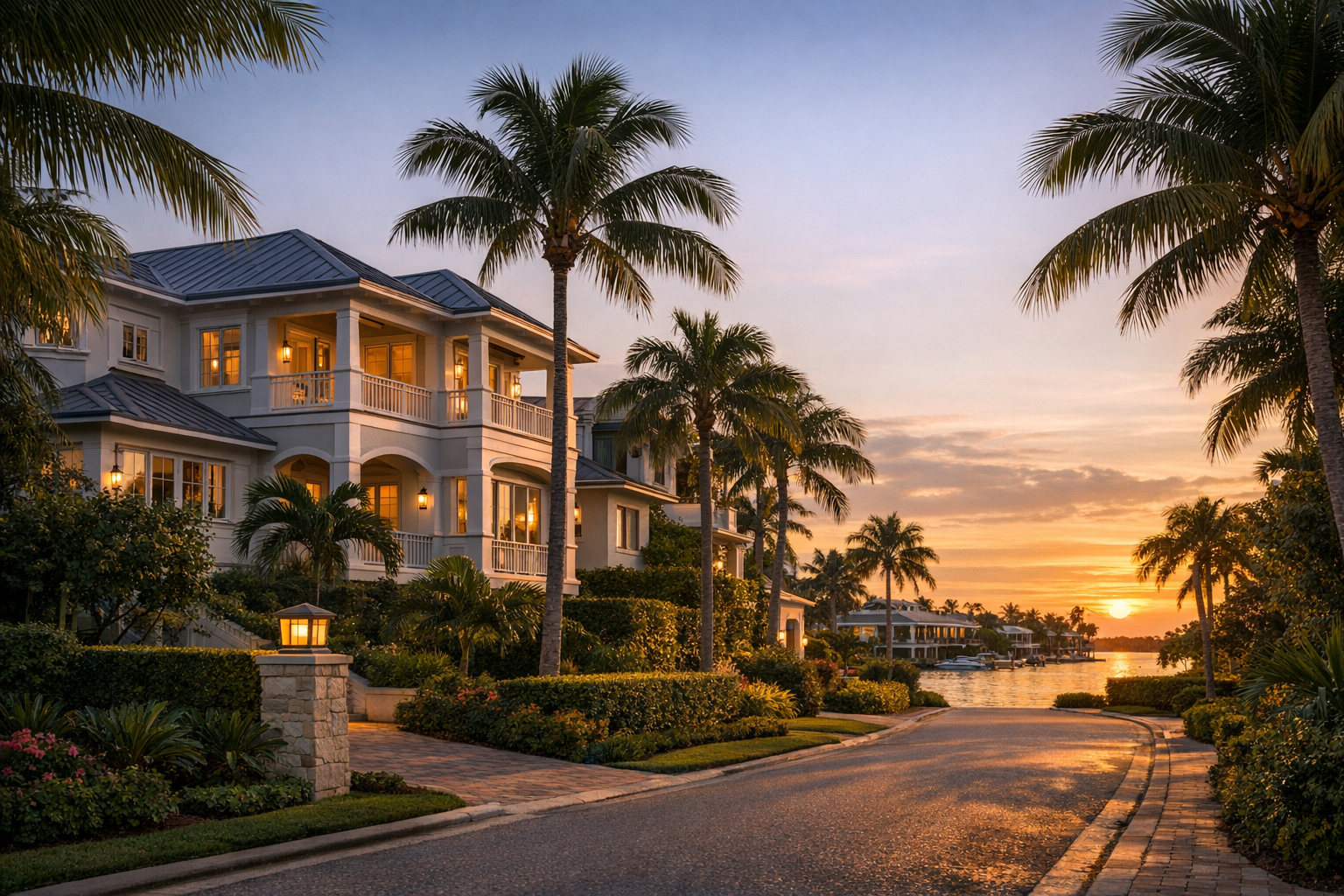
The luxury housing map in Florida is shifting in a way that would have seemed unlikely just a few years ago. Miami, Palm Beach, and other headline-making coastal enclaves still draw attention, but Naples is emerging as a quieter yet increasingly serious destination for the ultra-wealthy. At the same time, the broader housing market is facing a more complicated backdrop: mortgage rates have edged higher, buyer demand remains resilient, and global tensions are adding fresh uncertainty to lending and household finances.
Naples Steps Into the Spotlight
Naples has long been associated with polished living, golf communities, and waterfront appeal, but the current cycle appears to be pushing it into a different category. The city is attracting affluent buyers who may once have focused almost entirely on Florida’s better-known east-coast luxury corridors. That matters because Naples is not merely benefiting from spillover interest; it is increasingly being seen as a destination in its own right.
The appeal is straightforward. Buyers looking for privacy, water access, and a more subdued atmosphere than South Florida’s flashier markets are finding a strong fit in Naples. For the ultra-wealthy, that mix can be just as valuable as prestige alone. In a state where luxury demand has often clustered around a few familiar names, Naples is building a stronger identity.
Why Wealth Is Moving Westward
The shift of high-end buyers toward Naples reflects a broader change in preference. Some affluent households want the amenities of a major luxury market without the density, pace, or visibility that can come with it. Naples offers a version of Florida wealth that feels more discreet, more residential, and in some cases more controllable.
That distinction matters. In luxury real estate, the top end is often driven as much by lifestyle as by price. Waterfront access, compound-style properties, and a sense of exclusivity can outweigh the glamour of a more famous address. Naples appears to be benefiting from that calculation, especially among buyers seeking a primary residence, a seasonal retreat, or a long-term wealth-preservation asset.
The result is a market that is no longer just a niche alternative. It is becoming a competitor to the state’s better-known luxury hubs.
Rates Rise, Demand Holds
Against that luxury backdrop, the national mortgage picture remains active but somewhat less forgiving. Freddie Mac reported that the average 30-year fixed-rate mortgage rose to 6.30% for the week ending April 30, 2026, from 6.23% the week before. The 15-year fixed rate also increased, reinforcing the sense that borrowing costs are still moving in an unfavorable direction for many buyers.
Even so, demand has not fallen apart. Freddie Mac said buyer interest remains robust, suggesting that many households are still willing to move forward despite the higher cost of financing. That resilience is notable because it shows the market is not being driven by rates alone. Inventory, lifestyle preferences, regional migration, and expectations about future price movement all continue to shape purchasing decisions.
For luxury buyers, the rate increase may be less restrictive than it is for middle-market households, but it still affects psychology. Higher borrowing costs can influence how quickly buyers act, what price range they target, and whether they choose to finance at all. In high-end markets like Naples, many purchases may be less rate-sensitive, yet the broader tone of the market still matters.
Luxury Buyers Remain Less Rate-Sensitive
The ultra-luxury segment often behaves differently from the rest of the housing market. Buyers at the top end may have more cash, more flexibility, and a longer time horizon. That gives them room to ignore some of the pressure that rising mortgage rates place on conventional buyers.
Still, the current environment is not irrelevant to luxury pricing. Even wealthy buyers weigh opportunity costs, and financing conditions can shape the pace of deals. When rates rise, some buyers may lean more heavily on cash. Others may simply wait for more favorable conditions, especially if they are not under pressure to move quickly.
Naples could be somewhat insulated from the most severe rate effects if the market continues to attract buyers whose decisions are driven more by lifestyle and capital preservation than by monthly payment calculations. But no market is completely immune to broader lending conditions. Higher rates can slow the overall tempo, even in places where demand remains healthy.
Global Tensions Add Another Layer
The housing market is also dealing with a less traditional source of pressure: geopolitical instability. The summaries point to the U.S.-Iran conflict and the closure of the Strait of Hormuz as triggers for a wider economic ripple effect. Fuel costs, pharmaceuticals, jet fuel, and even helium are among the goods and inputs affected by the disruption.
That kind of shock can reach housing in indirect but meaningful ways. When costs rise across the economy, lenders can become more cautious, consumers can feel more stretched, and financial institutions may tighten standards. Credit scores and mortgage applications can be affected not just by personal finances, but by the broader mood of risk that spreads through the system during periods of uncertainty.
For homebuyers, the practical effect may be a more demanding lending environment. Even those who are financially prepared can encounter a tougher approval process if banks and lenders decide to become more selective. That creates a second headwind alongside higher mortgage rates.
What Buyers Should Watch Now
• Rising financing costs may alter timing decisions
• Lending standards could tighten if volatility persists
• Luxury markets may hold up better than the broader market
• Cash buyers may gain an advantage over financed purchasers
These factors do not point to a single clear outcome, but they do suggest a market where speed, flexibility, and financial strength matter more than before. Buyers who are prepared may still find opportunity, especially in markets with strong lifestyle appeal. Those who are less ready may face more friction, even if demand in their target area remains solid.
Naples as a Sign of the Moment
Naples is emerging as more than a local success story. It is a sign of how affluent demand is redistributing within Florida, and perhaps how luxury buyers are recalibrating what they want from a high-end market. The city’s rise suggests that discretion, waterfront living, and a quieter atmosphere can be just as compelling as the better-known glamour markets.
At the same time, the national and global context is less stable than it was even recently. Mortgage rates are drifting higher again, and geopolitical strain is feeding economic uncertainty that can reach all the way into credit scoring and loan approvals. That combination makes the housing picture more layered than a simple story of demand or price growth.
For now, the message is mixed but clear enough: luxury buyers are still active, Naples is gaining ground, and the financing environment is becoming more demanding. In a market shaped by both wealth migration and broader financial pressure, the winners will likely be the places that can offer value, privacy, and confidence all at once.