Volatile Rates Test Spring
Oil-driven inflation fears are lifting yields, making mortgage rates volatile as demand rises.
Mar 13th, 2026
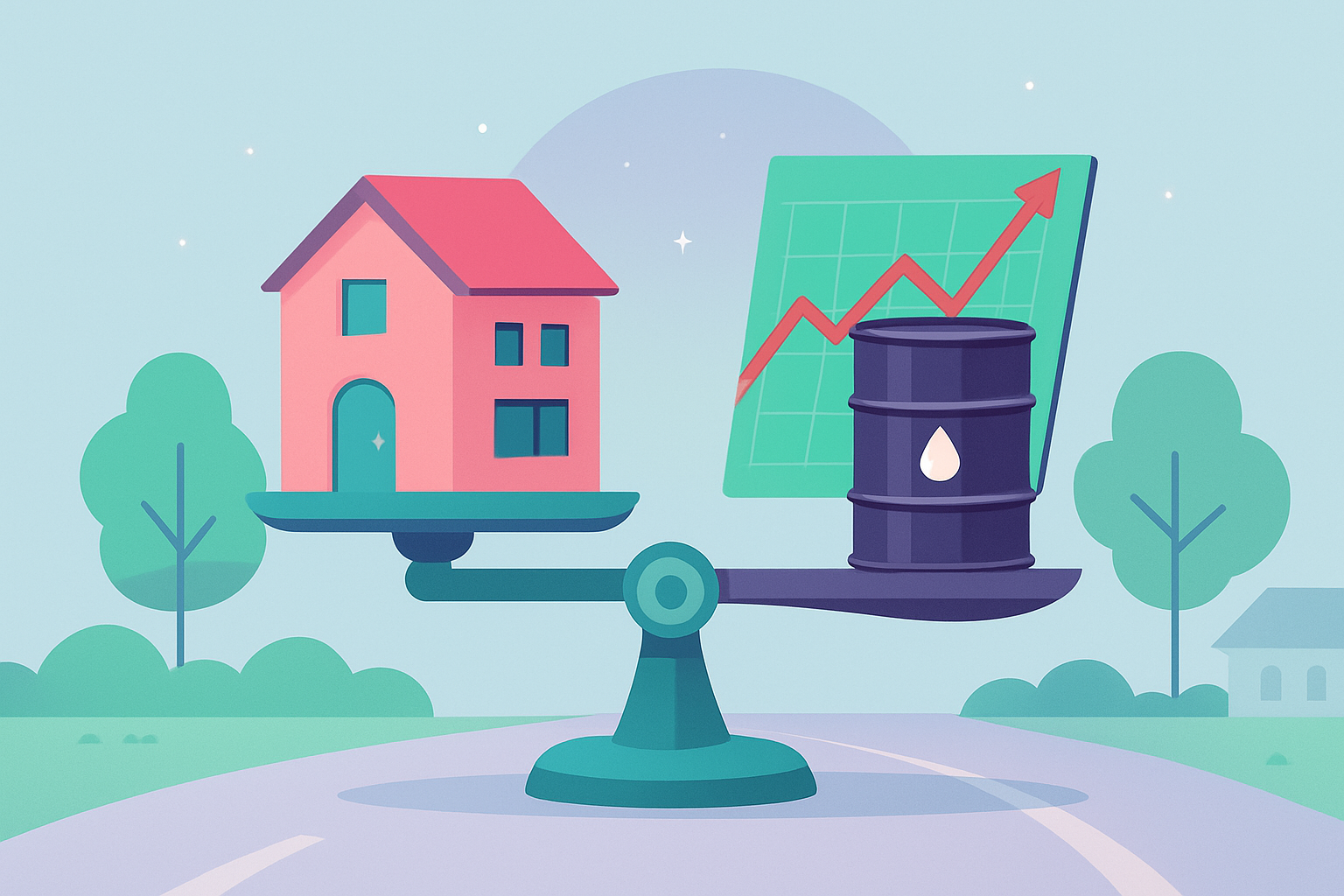
The housing market is trying to regain its balance, but it’s doing so on unstable ground. A modest lift in existing-home sales and an unexpected rise in purchase mortgage demand show buyers will still step in when the numbers make sense. At the same time, a war-driven oil shock is feeding into gas prices, inflation expectations, and bond yields—exactly the mix that can quickly lift mortgage rates and tighten affordability again. For anyone planning a spring purchase or weighing a second home, the takeaway is straightforward: momentum is there, but it’s fragile.
Mortgage rates: volatility is back in the driver’s seat
Mortgage rates have jumped recently as oil prices climbed, a reminder that housing costs are tied to forces well beyond real estate. When energy markets are disrupted, the spillover can fuel broader inflation concerns and move Treasury yields—signals that mortgage markets watch closely. The result is a rate backdrop that can shift fast, creating lock-timing whiplash for borrowers.
That volatility is already shaping behavior. Refinance activity, which had picked up when rates briefly looked more attractive, retreated once rates moved higher. It’s a clear sign of how rate-sensitive refinancing remains: many households only move when the savings are immediate and unmistakable. Purchase borrowers don’t always have that flexibility, and last week’s data showed homebuyer mortgage demand rose even as rates swung.
Homebuyer demand rises, even as refinancing cools
The divergence between purchase demand and refinancing is a useful snapshot of today’s market. Refinancing is optional for most homeowners; buying often isn’t. People move for jobs, family needs, school districts, and other life changes, and those pressures don’t pause just because the 30-year fixed rate has a rough week.
Even so, stronger purchase demand doesn’t mean affordability has suddenly improved. It suggests some buyers are adjusting—targeting different price points, accepting smaller homes, or relying on tactics like larger down payments. It also hints that shoppers waiting for a clean “all clear” may be concluding that perfect timing is unrealistic in a market where global headlines can move rates overnight.
Existing-home sales tick up, but spring risks are building
February delivered an improvement in existing-home sales, suggesting earlier stretches of lower mortgage rates helped draw some buyers off the sidelines. The increase was modest rather than dramatic, and overall demand was still characterized as subdued. That fits a market attempting to recover while still constrained by affordability and the aftereffects of higher borrowing costs.
The bigger question is what comes next. Higher mortgage rates tied to the Iran war’s impact on oil and financial markets could undercut that progress heading into the spring season. Spring typically brings more listings and more buyer activity, but if rates rise meaningfully, monthly payments can jump quickly—especially for buyers already stretching to qualify. A small rate move can be the difference between “approved” and “not quite,” or between a manageable payment and one that feels precarious.
Oil shock meets household budgets: why housing feels the squeeze
Drivers are now seeing the highest gas prices since 2024, with the national average for regular unleaded rising to roughly the mid-$3 range and climbing sharply from a month earlier. That’s not only a transportation issue—it’s a household cash-flow hit. When fuel costs spike, consumers often feel it immediately, and spending patterns can shift in ways that ripple through the broader economy.
Economists are also watching the second-order effects: higher energy prices can lift inflation expectations and add upward pressure to the 10-year Treasury yield. That matters for housing because mortgage rates often move in the same direction as longer-term yields. If inflation fears firm up and yields climb, mortgage rates can follow—even if housing itself is showing tentative signs of stabilization.
The link from oil markets to your mortgage payment isn’t one-to-one, but it’s real—and it’s a major reason buyers and sellers are struggling to forecast what the next few months will bring.
Second homes: opportunity, but the “double cost” reality is unavoidable
In a choppy rate environment, a second home can look like a smart long-term move—or like an avoidable financial burden. The practical reality is that a second property typically means two sets of housing expenses. That includes principal and interest, plus taxes, insurance, utilities, maintenance, and the surprise repairs that always seem to arrive on schedule.
If you’re considering a second home, the decision comes down less to the dream and more to the plan. Renting part-time can help offset costs, but it adds its own uncertainties: vacancy risk, local rules, ongoing management, and wear-and-tear. It’s also worth stress-testing how a second mortgage payment would feel if rates rise, if primary-home expenses increase, or if gas and other everyday costs keep climbing.
A second home can still make sense, but it tends to work best when the buyer has a strong cushion and a clear-eyed view of ongoing carrying costs—not just the purchase price.
Choosing a lender when information isn’t fully transparent online
With rates swinging, lender choice can matter as much as timing. One lender mentioned in recent coverage, Lower Mortgage, is described as offering a broad menu of mortgage types and prioritizing faster closings. That same coverage notes that details on many loans and services may not be fully available online, which can make comparisons harder if you rely primarily on websites.
In a market where speed and certainty can influence whether an offer wins, execution—how quickly a lender can process, underwrite, and close—can be a real differentiator. But when product specifics aren’t easy to review upfront, borrowers may need to do more direct legwork to understand options, fees, and requirements.
If you’re comparing lenders in this environment, it can help to focus on a few practical questions:
• How quickly can the lender close for your loan type and profile?
• What rate-lock options are available given current volatility?
• Which loan programs are truly on the table, and what are the tradeoffs?
What to watch next: rates, listings, and buyer psychology
The market is sending mixed signals: improved sales and stronger purchase demand on one side, and war-driven rate pressure on the other. That’s typical in transitional periods, but it also means the next phase of the spring season could be shaped by headlines as much as by housing fundamentals.
A few themes are likely to matter most in the near term:
• Whether oil-driven inflation concerns keep pushing yields—and mortgage rates—higher
• Whether buyers continue to transact despite payment uncertainty, or pull back again
The available coverage leans heavily on rates, demand indicators, and the oil shock, with less detail on inventory conditions and local market differences. That gap matters, because supply and regional pricing often determine how resilient sales remain when rates rise. Even so, the direction is clear: the market is trying to heal, but the cost of money is still steering.
Housing doesn’t require perfect conditions to move forward, but it does need predictability. Right now, buyers are showing they’ll act when they can, even amid volatility. The spring question is whether mortgage rates allow that tentative momentum to hold—or whether the next surge in energy prices and yields pushes the market back into wait-and-see mode.